
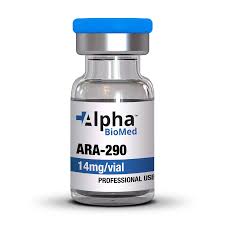


ARA-290: Benefits, Research, and How It Works
Introduction
ARA-290 is a synthetic peptide studied for its potential effects on inflammation, nerve health, and tissue protection. In recent years, researchers have shown growing interest in ARA-290 because of its possible role in regenerative and neurological research.
Unlike traditional erythropoietin compounds, ARA-290 was designed to target tissue-protective pathways without strongly stimulating red blood cell production. As a result, it became a major focus in inflammation and nerve-related studies.
What Is ARA-290?
ARA-290 is a small peptide derived from erythropoietin (EPO), a hormone naturally involved in red blood cell production.
However, ARA-290 differs because researchers study it mainly for:
- Tissue protection pathways
- Nerve support research
- Inflammation regulation
- Cellular repair signaling
Therefore, ARA-290 stands out as a unique peptide in regenerative science.
How ARA-290 Works
ARA-290 works by interacting with receptors linked to tissue repair and inflammatory signaling.
Research suggests it may:
- Influence inflammatory pathways
- Support nerve-related signaling
- Promote cellular protection mechanisms
- Reduce tissue stress responses
Because of these actions, researchers continue exploring ARA-290 in neurological and metabolic studies.
Potential Benefits of ARA-290 Research
1. Nerve Health Research
Researchers study ARA-290 for its possible role in supporting nerve-related pathways.
As a result, it has gained attention in neuropathy-related research.
2. Inflammation Regulation
Inflammation affects many biological systems.
Therefore, ARA-290 remains important in studies involving inflammatory signaling.
3. Tissue Protection Research
Researchers investigate whether ARA-290 may help support cellular resilience and repair mechanisms.
4. Regenerative Science Interest
Because regenerative medicine continues to grow, ARA-290 has become increasingly discussed in advanced peptide research.
Why ARA-290 Became Popular
ARA-290 gained popularity because it targets protective pathways without heavily affecting red blood cell production.
Unlike traditional EPO-related compounds, ARA-290 focuses on:
- Tissue signaling
- Cellular protection
- Nerve-related pathways
- Inflammation research
Because of this targeted approach, researchers consider it a promising area of study.
Is ARA-290 Approved?
ARA-290 remains primarily a research peptide.
Important considerations:
- Human research is still limited
- Long-term safety data remains incomplete
- Regulatory approval varies depending on research context
Therefore, discussions about ARA-290 should remain within scientific and educational settings.
Possible Risks and Concerns
Although ARA-290 is designed differently from traditional erythropoietin compounds, research into safety is ongoing.
Potential concerns may include:
- Limited long-term data
- Injection-site irritation
- Unknown metabolic effects
- Variability in product quality
As a result, careful evaluation remains essential.
ARA-290 vs Traditional EPO Compounds
Traditional EPO compounds primarily stimulate red blood cell production.
However, ARA-290 differs because:
- It focuses more on tissue protection pathways
- It may reduce inflammation-related signaling
- It targets regenerative research applications
Therefore, ARA-290 occupies a unique place in peptide science.
Conclusion
ARA-290 is an advanced research peptide studied for inflammation, nerve support, and tissue-protection pathways.
By targeting regenerative signaling mechanisms, ARA-290 continues to attract attention in neurological and cellular research.
Ultimately, ongoing studies will help researchers better understand its long-term potential and biological effects.







Reviews
There are no reviews yet.