
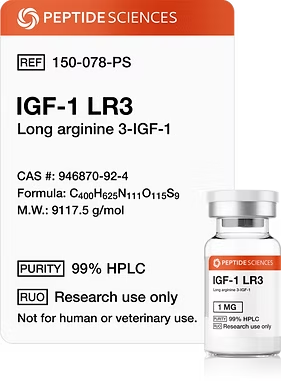
Explore the advanced research potential of IGF-1 LR3 Peptide, a long-acting insulin-like growth factor analog widely studied for its role in muscle development, recovery support, and performance-focused wellness research. Known for its extended activity profile and powerful anabolic signaling properties, IGF-1 LR3 has become one of the most recognized compounds in peptide science and regenerative performance studies. Researchers continue to investigate its possible applications in muscle growth research, tissue repair, cellular regeneration, and metabolic wellness.
IGF-1 LR3 is a modified version of insulin-like growth factor-1 (IGF-1) designed with an extended amino acid sequence to improve stability and prolong activity duration. Because of its enhanced half-life and strong interaction with growth-related pathways, researchers commonly study IGF-1 LR3 Peptide in advanced fitness, recovery, and regenerative science investigations.
One of the most recognized benefits of IGF-1 LR3 Peptide is its potential role in supporting muscle growth and recovery research. Scientists investigate how this peptide may contribute to muscle cell activity, tissue repair, and post-exercise recovery processes. This has made IGF-1 LR3 highly valuable in sports performance and physique-focused studies.
IGF-1 LR3 is also widely researched for its potential regenerative and cellular-supporting properties. Researchers continue to explore how this peptide may help support healthy cellular growth pathways and tissue maintenance. Because of this, it has become increasingly important in regenerative wellness and recovery-related peptide research.
Another major area of interest is IGF-1 LR3’s potential impact on body composition and metabolic research. Scientists studying growth-related signaling pathways examine how this peptide may contribute to lean muscle maintenance and energy utilization. Its connection to anabolic activity has made it a prominent compound in fitness and metabolic wellness investigations.
In addition to muscle and recovery support, IGF-1 LR3 Peptide is frequently explored for its potential role in performance optimization and physical resilience studies. Researchers investigating athletic performance continue to study how this peptide may support recovery balance and overall physical conditioning.
IGF-1 LR3 is also recognized for its extended activity profile compared to standard IGF-1 compounds. Its longer-lasting stability allows researchers to examine sustained growth-related signaling in controlled laboratory environments, making it highly relevant in advanced peptide science.
High-quality IGF-1 LR3 Peptide products are typically manufactured under strict purity and testing standards to ensure consistency and reliability for research use. Proper storage and handling are essential for maintaining peptide stability and preserving accurate laboratory conditions.
As peptide science and regenerative wellness research continue to evolve, IGF-1 LR3 Peptide remains one of the most respected compounds in muscle development and performance-focused investigations. Its potential applications in recovery, tissue repair, muscle support, and metabolic wellness research make it a valuable addition to advanced peptide research programs.
Key Benefits of IGF-1 LR3 Peptide
- Supports muscle growth and recovery research
- Studied for tissue repair and regenerative support
- May promote healthy body composition research
- Commonly researched for performance and physical resilience
- Potential support for cellular growth and recovery studies
- Extended activity profile for advanced peptide investigations
- Popular in fitness and regenerative wellness research
Disclaimer: This product description is intended for informational and research purposes only. IGF-1 LR3 Peptide is not intended to diagnose, treat, cure, or prevent any disease. Always follow applicable regulations and research guidelines.

Reviews
There are no reviews yet.